

Most public funding programs distribute funds to families on a regular schedule throughout the year. These funding distributions—often called “fund drops”—can create periods of increased purchasing activity as families receive new funds and begin planning educational purchases.
Understanding when families receive funding can help you anticipate enrollment patterns and prepare your classes for periods of increased demand.
What Is a Fund Drop?
A fund drop is when a public funding program deposits money into a family’s account.
Families can then use those funds to purchase approved educational services, including eligible Outschool classes.
Depending on the program, funds may be distributed:
- Annually
- Quarterly
- Three times per year
- Twice per year
- On a rolling basis
Each state and program has its own funding schedule.
Public Funding Program Timelines and Average Funding Amounts
Public funding programs distribute funds to families on different schedules throughout the year. The chart below provides an overview of funding timelines and approximate annual funding amounts across the public funding programs currently available on Outschool.
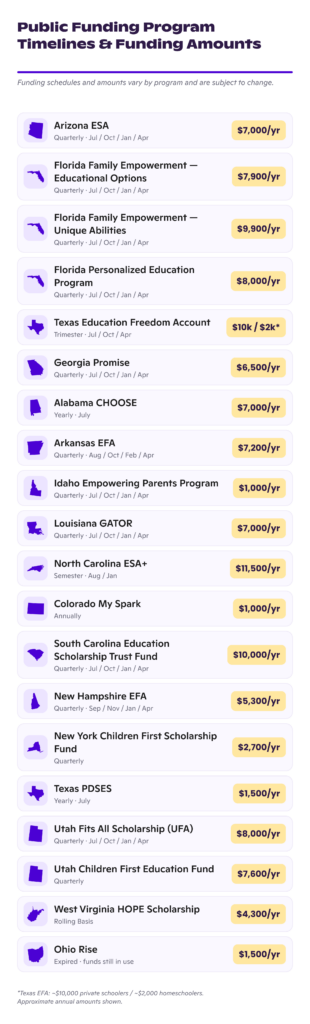
Note: Funding schedules and award amounts vary by program and may change from year to year. Families should refer to their program administrator for the most current information.
Why Fund Drop Dates Matter
Many public funding families make purchasing decisions shortly after receiving new funding.
As a result, educators may notice increases in:
- New learner enrollments
- Multi-class purchases
- Long-term learning plans
- Interest in upcoming courses and camps
Families often review their available balances and make purchasing decisions shortly after receiving a new allocation of funds.
How to Prepare for Fund Drops
Keep Your Class Schedule Current
Families often plan several weeks or months ahead when new funds become available.
Make sure your upcoming classes are published well in advance of major enrollment periods.
Upload Required Credentials
Some public funding programs require educator credentials before families can enroll using public funds.
Keeping your credentials up to date helps ensure you’re eligible when families begin spending new funding.
Consider Future Offerings
Many public funding families look for:
- Semester-long learning plans
- Academic enrichment
- Tutoring
- World languages
- Ongoing classes
- Multi-course pathways
Having a variety of offerings available can help families use their available funding throughout the year.
Plan Ahead for Seasonal Demand
You may see increased interest around:
- Back-to-school planning (July – October)
- Mid-year academic support (December – March)
- Summer enrichment (May – July)
Publishing classes before these periods can help families discover your offerings when they are actively making purchasing decisions.
Frequently Asked Questions
Will I always see a spike in enrollments after a fund drop?
Not necessarily. Enrollment patterns vary by program, state, subject area, and learner needs. However, many educators report increased activity shortly after families receive new funding.
Can families save unused funds?
This depends on the program. Some programs allow funds to roll over, while others have spending deadlines or annual renewal requirements.